
50-Year Survivor! LeRay’s Story
May 8, 1975, began as an ordinary family day. Mike Bassett rose early and headed to work, while his wife LeRay prepared breakfast for their children, Kim (3) and Sandy (2). Mike’s mother, who was visiting from out of state for a few days, also joined them.
Around 10 a.m., Mike received a call from a friend who was a policeman, informing him that an ambulance was on its way to his house. As he drove home, he couldn’t shake the feeling that something had happened to his mother. He had to stop as the ambulance pulled out of their driveway. Upon entering the house, he was surprised to find his mother sitting with the kids on her lap. She explained that LeRay had collapsed unconscious while making the bed. After ensuring everyone was okay, Mike rushed to Camden Hospital, where she had been taken.
When LeRay arrived at the hospital, she was still unconscious. The doctors conducted tests and scans and decided to transfer her to Maine Medical Center in Portland, Maine.
At Maine Med, the doctors conducted further tests and performed a spinal tap. They discovered that LeRay had a basilar brain aneurysm hemorrhage. Her neurosurgeon recommended that she be referred to a doctor in Canada who was developing and performing a procedure to clip basilar aneurysms. Dr. Charles Drake of the University of Western Ontario accepted her as a patient for surgery.
Meanwhile, back home, Mike’s mother had contacted his sister, who lived in Pennsylvania. His sister discussed the situation with her own family and immediately flew to assist his mother in watching the kids. LeRay’s mother, brother, and sister-in-law all lived nearby to provide support.
Mike and LeRay were flown to Canada in an ambulance plane with a nurse. Dr. Drake performed a craniotomy and placed a clip on the brain aneurysm — 12 days after it had hemorrhaged. Once LeRay was stabilized, they flew back home on a commercial airline.
Upon their return, Mike’s mother and sister headed home, while LeRay began her recovery. Apart from a scarf covering her shaved head and bandages, it was difficult to tell what she had endured. Family and friends were astounded that LeRay, on the outside, appeared exactly as she had before the hemorrhage.
Back then, people didn’t rely on Google or the library to research medical information. Instead, they visited doctors, shared their symptoms, and followed the doctor’s instructions. The doctors performed the necessary procedures, and the patients went on with their lives.
LeRay and Mike were unaware at the time that half of people with brain hemorrhages don’t survive. Those who do often experience motor difficulties, speech problems, and other complications. LeRay focused on managing her specific symptoms. She was fortunate to have only a few, including fatigue, some double vision, and a clicking sound in her head. These symptoms gradually subsided over time.
Four years after the hemorrhage, LeRay and Mike were sitting at their dining room table when LeRay suddenly stood up, began to shake, and collapsed. She remained unconscious for a short period, experiencing muscle convulsions. Mike promptly called for an ambulance, and LeRay was taken to the hospital for tests and X-rays. However, the results were inconclusive, and she was prescribed Dilantin and sent home.
On June 4, 1979, as Mike and LeRay were about to go to bed, LeRay complained of feeling unwell. She described a severe headache and intense neck pain. An ambulance was promptly called, and Mike’s mother, who was visiting, was present to care for the children.
After undergoing various tests, the spinal tap revealed that LeRay had hemorrhaged again. The doctors contacted Dr. Drake in Canada, and arrangements were made for an ambulance flight back to Canada. Regrettably, the doctors informed Mike that the prognosis was not favorable. Consequently, the family decided that LeRay’s mother would accompany her in the ambulance plane, while Mike and the children would drive to Canada.
LeRay underwent surgery, and the aneurysm was successfully clipped for the second time. Dr. Drake informed Mike that this was one of his most challenging clippings. Unlike modern metals that are MRI-compatible, both of LeRay’s clips were metal that now prevents her from undergoing an MRI.
Upon returning home, LeRay was fortunate to have no physical side effects. However, this time, she developed a fear of a hemorrhage happening again and experiencing severe headaches. These fears are very common for many brain aneurysm survivors.
In December 1997, LeRay’s annual angiogram revealed a second, small aneurysm on the opposite side of her head that required monitoring.
In March 1998, an angiogram showed both clips on LeRay’s large aneurysm had slipped, allowing blood to reenter the aneurysm. The surgeon in Portland informed them that the aneurysm could not be clipped again, but they recommended a new treatment called endovascular coiling in Boston, MA by Dr. Eddie Kwan.
Advancements in medical techniques, devices, and skills had come a long way since 1975 and Dr. Kwan was one of the doctors bringing the coiling technique to New England.
Mike and LeRay traveled to Boston and met with Dr. Kwan, who explained the coiling procedure. In April 1998, Dr. Kwan successfully coiled the aneurysm.
In September 1998, the second, smaller aneurysm was surgically treated in Portland. A gauze pack was applied to reinforce the aneurysm wall, stabilize it, and prevent rupture.
On August 12, 2008, LeRay’s annual angiogram indicated that the large aneurysm required coiling again, and a stent was placed to protect the coils. This procedure was performed by Dr. Malek at Tufts Hospital in Boston.
Subsequent checkups in February 2009, and February and July 2012, resulted in additional coils on her first aneurysm that originally ruptured back in 1975.
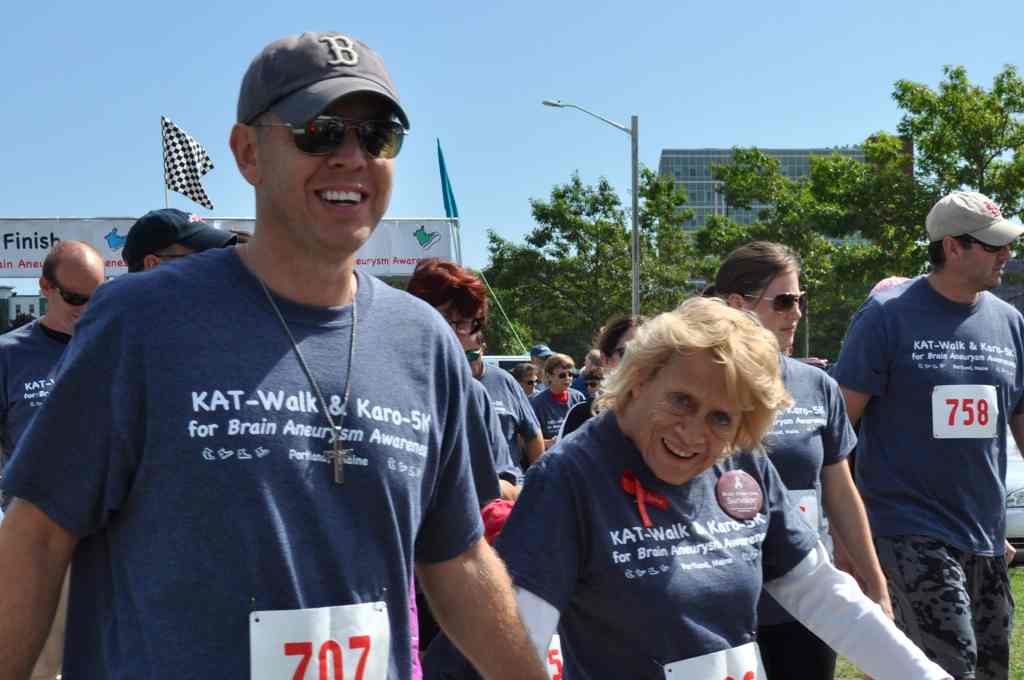
In 2011, Mike, LeRay, Kim, and Sandy joined the Maine Brain Aneurysm Awareness Committee, a group of dedicated individuals who provide information, education, support, scholarships, and empathy to those affected by brain aneurysms and brain injuries.
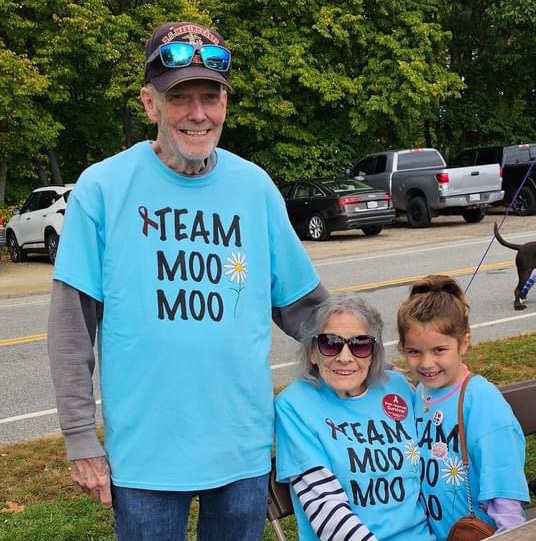
As of May 2025, LeRay is a 50-year brain aneurysm survivor and an inspiration to many! She and her family are eternally grateful to the EMTs, doctors, nurses, friends, family, and the Maine Brain Aneurysm Committee for their unwavering support and assistance throughout her journey.
Your Stories Matter
Every journey through a brain aneurysm is unique. We invite survivors, family members, and advocates to share their personal stories of hope, resilience, and recovery. By spotlighting these narratives, we not only foster community but also inspire others facing similar challenges. Your voice can make a difference.