
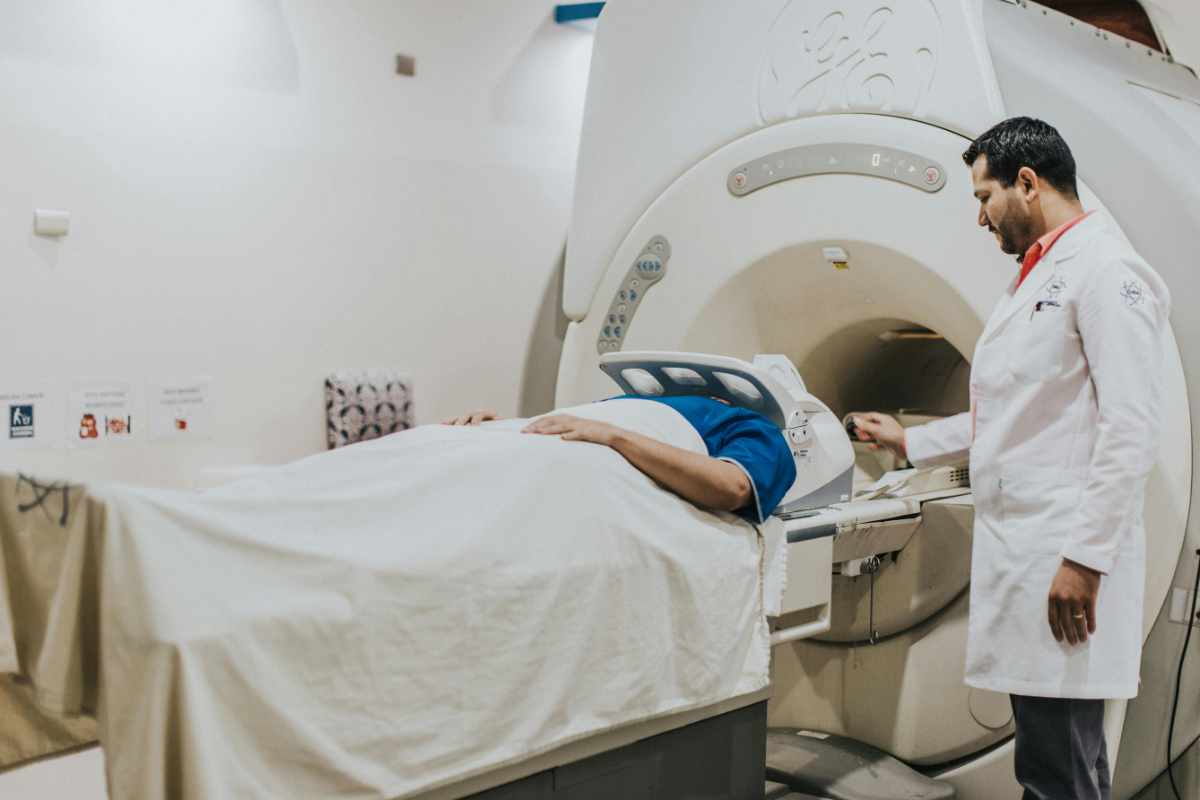
Because unruptured brain aneurysms often do not cause any symptoms, many are discovered in people who are being treated for a different condition. If your doctor believes that you have a brain aneurysm, you may have the following tests:
Computed Tomography (CT)
A CT scan can help identify bleeding in the brain. Sometimes, a lumbar puncture may be used if your doctor suspects that you have a ruptured cerebral aneurysm with a subarachnoid hemorrhage.
Computed Tomography Angiogram (CTA)
CTA is a more precise method of evaluating blood vessels than a standard CT scan. CTA uses a combination of CT scanning, special computer techniques, and contrast material (dye) injected into the blood to produce images of blood vessels.
Magnetic Resonance Angiography (MRA)
Similar to a CTA, MRA uses a magnetic field and pulses of radio wave energy to provide pictures of blood vessels inside the body. As with CTA and cerebral angiography, a dye is often used during MRA to make blood vessels show up more clearly.
Cerebral Angiogram
During this X-ray test, a catheter is inserted through a blood vessel in the groin or arm and moved up through the vessel into the brain. A dye is then injected into the cerebral artery. As with the above tests, the dye allows any problems in the artery, including aneurysms, to be seen on the X-ray.
Dr. Kimon Bekelis, from the Stroke and Brain Aneurysm Center of Long Island, describes the three main imaging modalities available to study the brain and make accurate and timely decisions.
As part of Brain Aneurysm Awareness Month (September), the goal of the Maine Brain Aneurysm Awareness Committee is to educate the general public about brain aneurysms and the possible signs and treatments to promote earlier diagnosis and treatments.
Learn more about brain aneurysms, symptoms, treatments, and general support on our website.