
The treatment options for a brain aneurysm depend on a few things. These things include your age, size and location of the aneurysm, any additional risk factors, and your overall health.
If you have an aneurysm with a low risk of rupture, you and your doctor may want to continue to observe your condition rather than do surgery. You might make this choice because surgery also has risks. Your doctor may suggest ways to keep your blood vessels as healthy as possible, such as managing high blood pressure and not smoking. If your aneurysm is large or causing pain or other symptoms, though, or if you have had a previous ruptured aneurysm, your doctor may recommend surgery.
The following procedures are used to treat both ruptured and unruptured brain aneurysms:
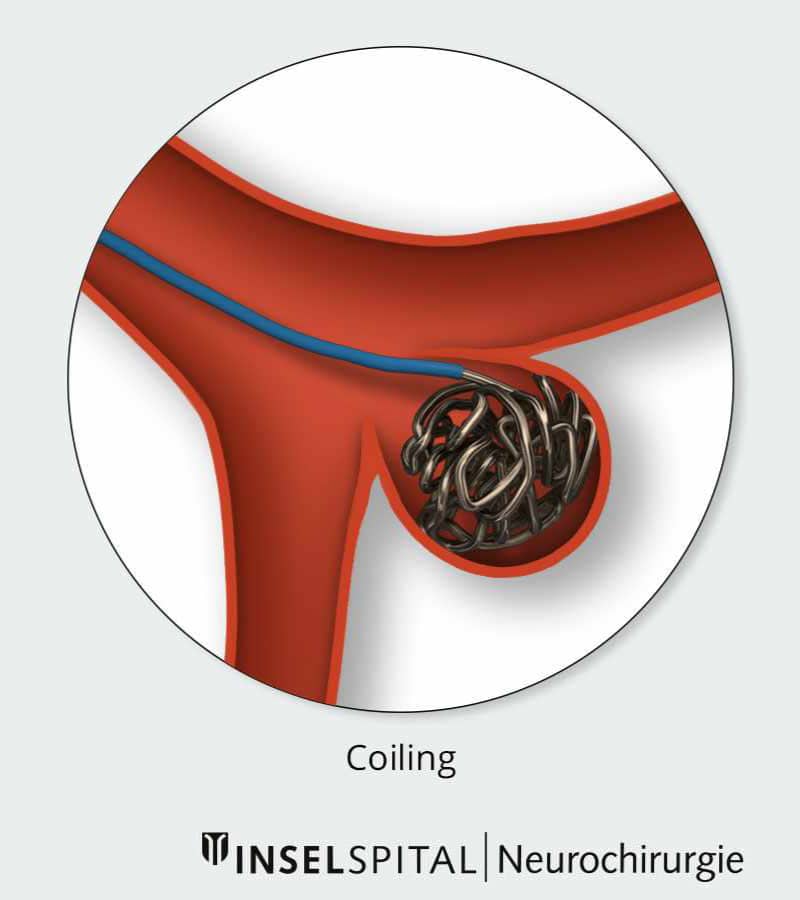
Endovascular Coiling
During this procedure, a small tube is inserted into the affected artery and positioned near the aneurysm. Small soft metal coils are then moved through the tube into the aneurysm, filling the aneurysm and making it less likely to rupture. This procedure is less invasive than surgery. But still involves risk, including rupture of the aneurysm. This procedure is performed by an endovascular neuro-radiologist in the radiology department. LEARN MORE

Surgical Clipping
This open brain surgery involves placing a small metal clip around the base of the aneurysm to isolate it from normal blood circulation. This decreases the pressure on the aneurysm and prevents it from rupturing. Whether this surgery can be done depends on the location of the aneurysm, its size, and your general health. Recovery time is lengthier. This procedure is performed by a neurosurgeon within an operating room setting. LEARN MORE

Endovascular Stent/Flow Diverter
During these procedures, mesh stents or flow diverters (sometimes called pipeline) are placed in the aneurysm, reducing blood flow to the aneurysm and making it less likely to rupture. This procedure is less invasive than surgery. But still involves risk, including rupture of the aneurysm. This procedure is performed by an endovascular neuro-radiologist in the radiology department. LEARN MORE
Watch this very terrific video created by the Cleveland Clinic illustrating the three main treatments for brain aneurysms.
As part of Brain Aneurysm Awareness Month (September), the goal of the Maine Brain Aneurysm Awareness Committee is to educate the general public about brain aneurysms and the possible signs and treatments to promote earlier diagnosis and treatments.
Learn more about brain aneurysms, symptoms, treatments, and general support on our website.